
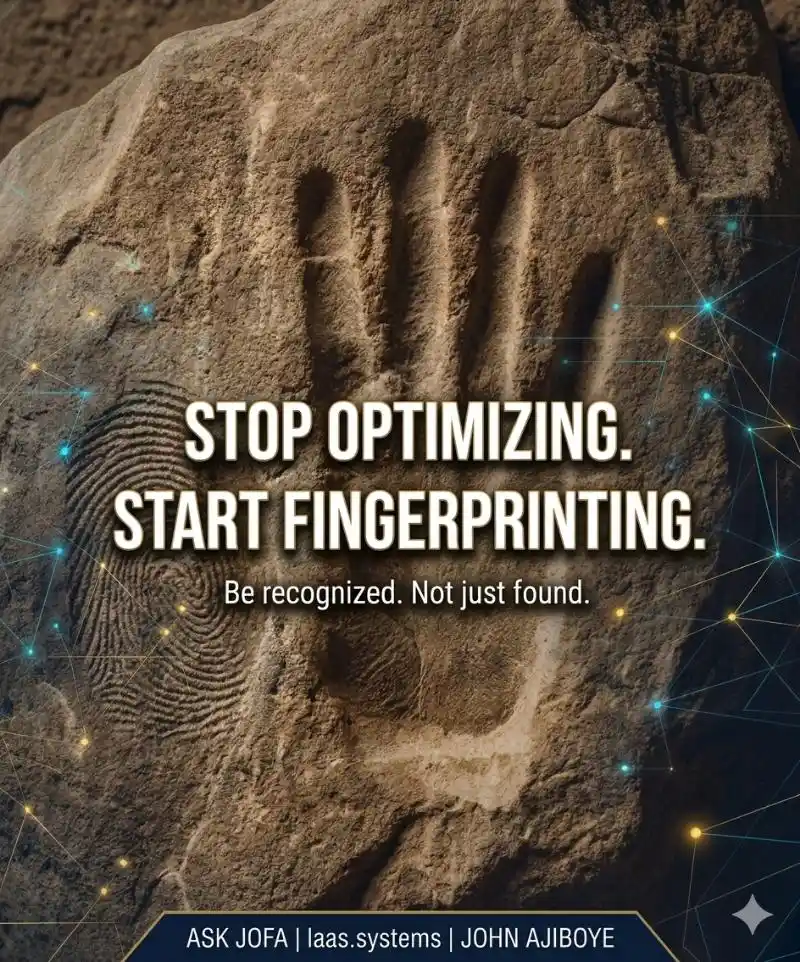
Identity Over Optimization: Systems Architecture for Lead Gen
The digital landscape for Fintechs, SMEs, and global leaders has shifted from a battle for attention to a battle for recognition. In an era where AI can generate competent content in seconds, the traditional “Optimization” playbook—chasing keywords, trends, and platform hacks—has become a race to the bottom.
To achieve sustainable growth and high-intent lead generation, you must move beyond being “findable” and become unmistakable.
The Optimization Trap: Why “Being Found” Is No Longer Enough
For years, the gold standard for growth was SEO and platform optimization. If you followed the rules of Google, LinkedIn, or YouTube, you were rewarded with visibility. However, as AI models now change their parameters monthly, those who only optimize find themselves building on shifting sand.
The Cost of Chasing the Algorithm
When a company prioritizes what the platform wants over what they uniquely represent, they fall into the Optimization Trap:
- The Mirror Effect: Headlines, hooks, and strategies begin to look exactly like the competition.
- Vanishing Authority: Competent but forgettable content fails to build the “Trust Architecture” required for high-stakes B2B or Fintech corridors.
- The Visibility Illusion: High reach without high intent leads to a lack of conversion. Being found by a thousand people who don’t recognize your value is a systemic failure.
Transitioning to Fingerprinting: The Infrastructure of Trust
The new strategy for 2026 is Fingerprinting. While optimization asks, “What does the platform want?”, fingerprinting asks, “What can only come from this system?”. For a Fintech startup in Nigeria or a global SME, this is the only true hedge against AI-driven commoditization.
What Makes a Digital Fingerprint?
Your digital fingerprint is the “raw material” that existed before you became a brand or a title. It is comprised of:
- Systemic Point of View: A way of making meaning out of market data that no one else can claim.
- Institutional Scars: Real-world experience—such as decades in professional banking—that provides a “Diagnostic Authority” AI cannot simulate.
- Unmistakable Patterns: A consistent tone and worldview that allows an audience to know a piece of work is yours before they even see your name.
Lead Generation for Leaders: From Discovery to Recognition
In high-stakes niches, there is a fundamental difference between being found and being recognized.
- Being Found: A luck-based event where the system surfaces you due to keywords or timing.
- Being Recognized: A systemic outcome where the audience knows your “pattern” and associates your brand with a specific solution.
Strategic Lead Generation for SMEs and Fintech
To dominate local and global markets, leaders must implement Trust Architecture:
- Bypass the Manual Switchboard: Stop relying on manual outreach or viral “luck.” Build direct, systemic connections where the AI agent selects you because your trust signals are unmistakable.
- Focus on High-Intent Corridors: Engineering your digital presence so that you are “Findable and Trusted” by those who are already looking for high-level diagnostic help.
- The Systemic Hedge: Build something that no platform update can take away—your voice and your unique trust signals.
Conclusion: The Architecture of the Future
The platforms will continue to shift. Algorithms will prioritize different lengths, formats, and brands every few months. You can spend your entire professional life chasing those changes, or you can build an architecture that lasts.
Your digital fingerprint decides whether you are remembered tomorrow. In the age of AI, the fingerprint is not just an advantage; it is the entire game.
Stop focusing on who is on the phone. Start focusing on who owns the network.
JOHN AJIBOYE Systems Architect | ASK JOFA laas.systems

About John Ajiboye
Founder, ASK JOFA Digital · Creator of ASK JOFA Fintech · Architect of LAAS™
John Ajiboye is a Digital Business Consultant, Content Strategist, and former institutional banker with 19+ years of corporate banking experience. Holding an M.Sc. in Computer Science, he bridges the gap between financial-level ROI discipline, technical architecture, and modern digital scaling.
As the strategic architect of LAAS™ (Lead Authority & Acquisition System), John helps executives, consultants, and SMEs turn digital visibility into predictable revenue engines. His core methodology spans advanced search and AI discovery optimization (SEO, AEO, and GEO), high-ticket offer positioning, and multi-channel acquisition infrastructure across YouTube, web, and LinkedIn.
Through ASK JOFA—his global fintech media network with over 31,000 subscribers—John delivers step-by-step guides on digital finance, fintech applications, mobile business strategies, and digital monetization tools. He has partnered with leading international platforms—including AirTM, Bybit, Gate.io, OneKey, ApexPay, PST, and Spend.Net—to execute high-converting product education and user acquisition campaigns.
Through ASK JOFA Digital, John transforms expertise into automated media assets that attract high-intent leads and build lasting market trust—without relying on short-lived ad spend or social media virality. His systems deliver three targeted outcomes: helping professionals Get Hired™, consultants Get Clients™, and SMEs Get Customers™.

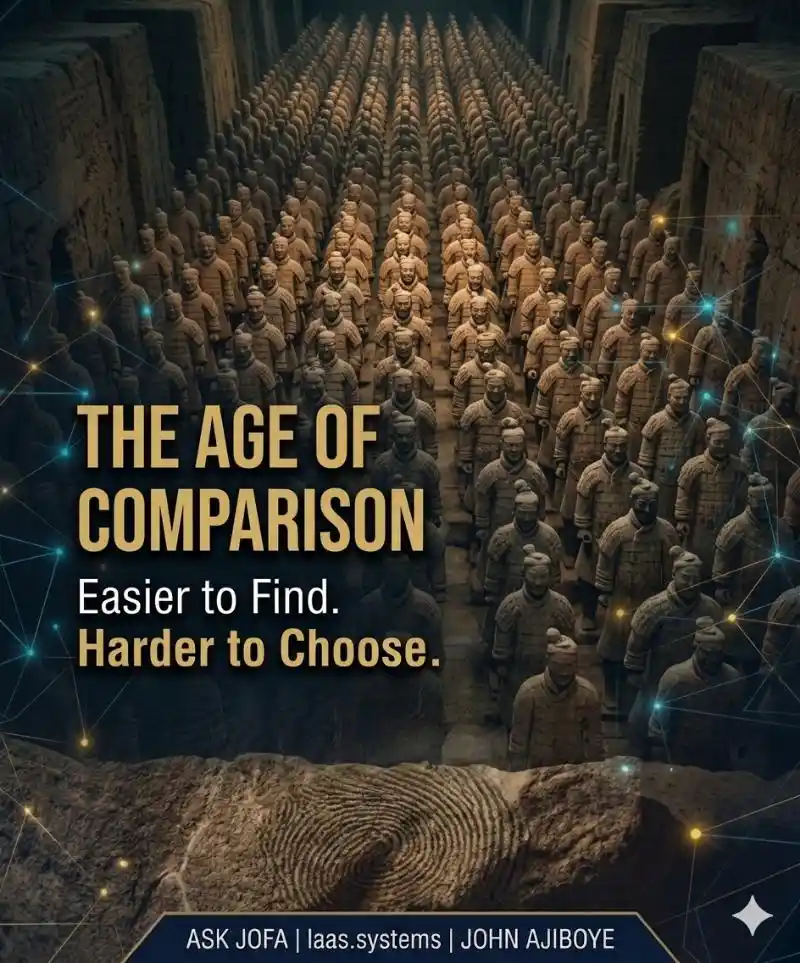
The “Author’s Master Comment”
The shift from Optimization to Trust Architecture is the most critical move a Fintech or SME leader can make in 2026. While many are still focused on basic SEO hacks, those who build a unique Digital Fingerprint are the ones who will own their network.
I’ve spent 19 years in the banking sector seeing how trust is built through systems, not just slogans. If you’re ready to stop chasing the algorithm and start building an infrastructure that AI agents and high-intent leads actually recognize, this is your roadmap.
For those looking to apply these Systems Thinking principles to specific platforms, my YouTube SEO Setup Consultation is a great next step to ensure your video assets are ‘Findable and Trusted’.
What’s the biggest ‘optimization’ challenge you’re facing right now?
Spot on. One thing I’ve noticed is that many SMEs mistake ‘noise’ for ‘authority.’ In 2026, the noise is automated, but the Trust Architecture is human-led. My goal with the LAAS™ (Lead-As-A-Service) framework is to help leaders build that unmistakable digital presence.
I’m approving this addition to the thread because it highlights the core of the issue: if your lead generation isn’t built on a foundation of trust and unique identity, it’s just a temporary hack.
Looking forward to seeing more leaders shift their focus from the ‘how’ of optimization to the ‘who’ of fingerprinting. Let’s keep building.
Exactly. The transition to Trust Architecture isn’t a luxury anymore; it’s a survival metric. Having spent nearly two decades inside institutional banking, I watched how structural trust saves or breaks an acquisition pipeline. Algorithms change every quarter, but a pristine system always wins. Let’s build engines that command respect, not just impressions